

⏳ Read Time: 3 min, 691 words
📌 What’s inside:
🧠 What made Rafa great
🎾 What made Rafa different
🏁 The misconceptions most athletes have about confidence
📖 Anecdote: The Myth of Rafa
This week, on the 29th, Netflix is releasing a 4-part miniseries on Rafa’s last year of playing tennis.
We love Rafa here at BETTER. We believe that the combination of Rafa, Federer, and Novak all provide fascinating insights on the different looks that greatness can take, and they were all competing against each other at the same time.
Rafa had a fairly typical tennis upbringing.
Well, almost no great tennis player has a typical upbringing. But, Rafa hit balls hours and hours a day. Coached by his uncle, Uncle Toni, Rafa become known even at a remarkably young age for the length of time he could train.
While most tennis players with that type of upbringing burn out, it fueled Rafa’s greatness. It’s a mystery which athletes make it and which ones eventually fall out of love with the sport.
But, no one ever questioned Rafa’s love of tennis.
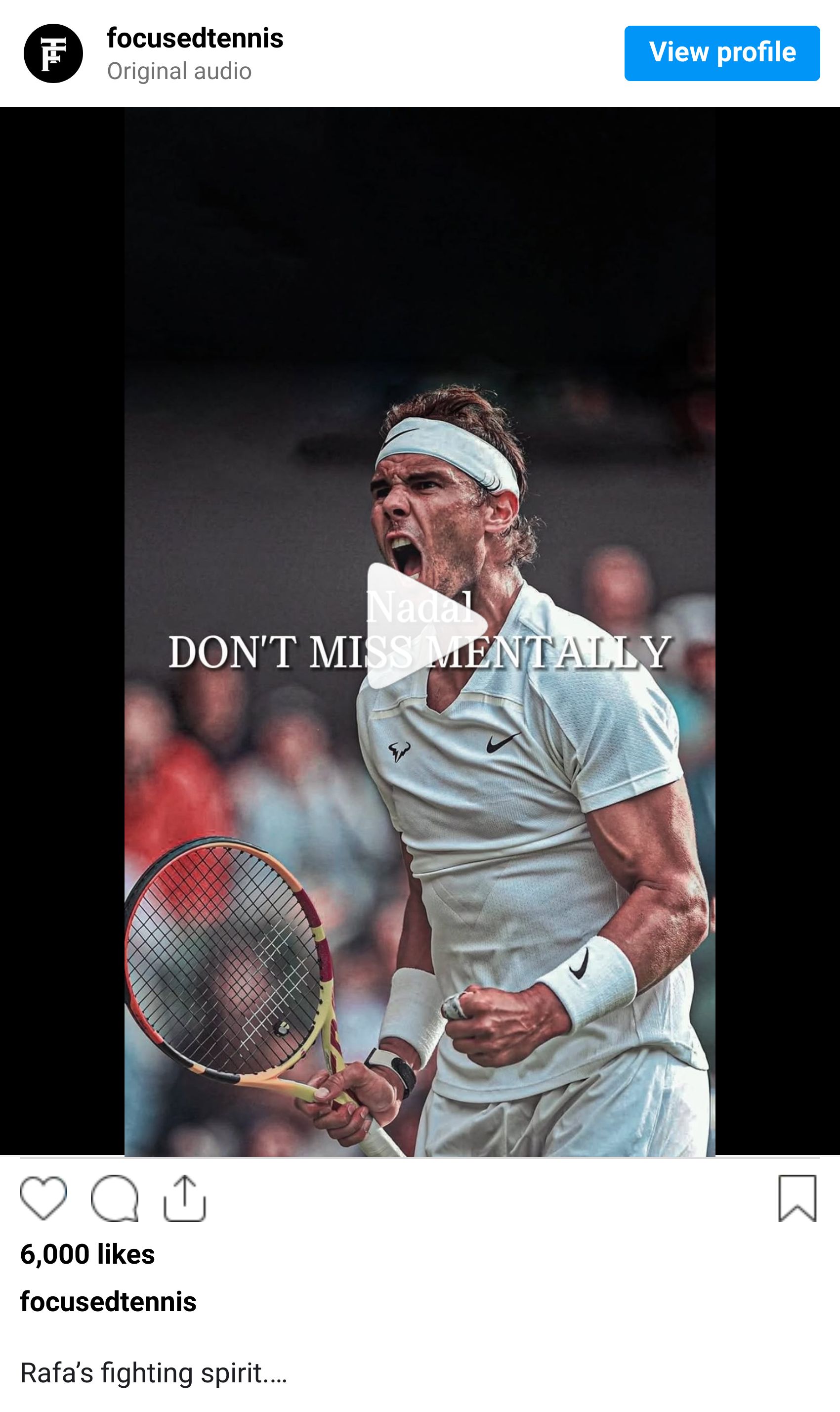
And it’s an even greater mystery how someone with that much technical training could, at the peak of his greatness, say something like this:
🧠 The Big Idea
One of the biggest ideas in our Game Within work is this:
Fear is not the enemy. Avoiding fear is.
The best competitors in the world don’t wait until fear disappears.
They learn how to move with it, compete through it, and stay committed despite it.
That’s what Rafa did constantly.
🎾 The Rafa Highlight Reel
1. He accepted discomfort instead of fighting it.
Rafa never needed to “feel perfect” to compete well.
Bad conditions. Bad momentum. Pressure. Tightness. Long matches.
He accepted that discomfort was part of elite competition.
A lot of athletes waste energy wishing things felt easier.
Rafa competed anyway.
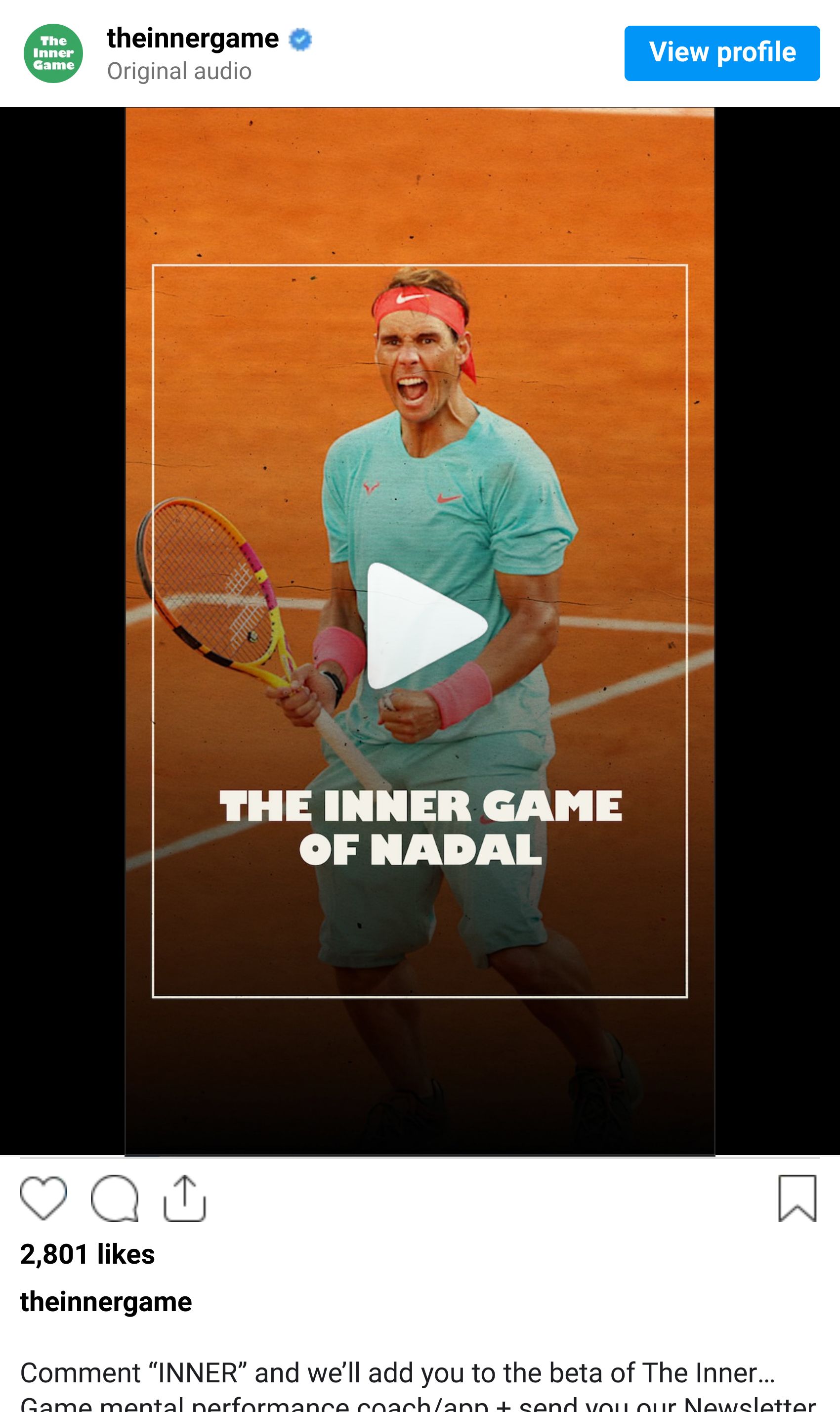
2. He focused obsessively on the next point.
One of Rafa’s greatest strengths was his ability to return to the present.
Not the missed shot, the crowd, the momentum, or the consequences.
Just: “What does this moment require of me right now?”
That’s composure.
3. He treated routines like anchors.
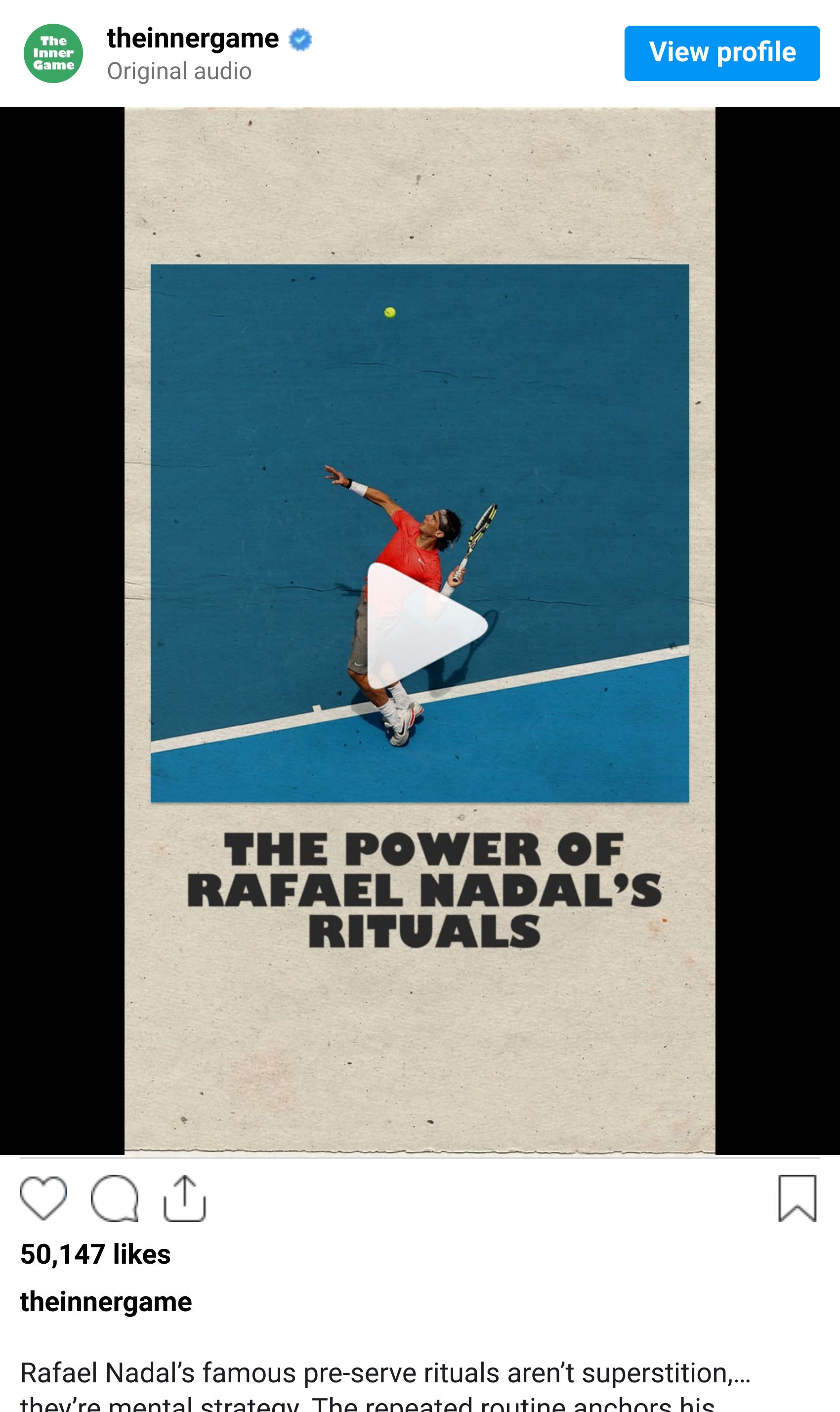
Rafa’s routines weren’t superstition.
They were regulation.
Breathing. Tempo. Resetting. Refocusing.
While he was a passionate, fiery player. He didn’t have to rely on emotion to stay steady.
He built systems to return himself to center.
4. He competed with intensity without panicking.
This is where athletes (and coaches) get confused.
Intensity does NOT mean rushing.
It’s not emotional chaos.
It’s not trying harder and harder.
Rafa played with unbelievable effort while still staying disciplined.
Many athletes are not able to do one without the other.
5. He understood that adversity is a part of the path.
Injuries. Losses. Doubt. Slumps. Rafa’s career was full of obstacles.
But he never seemed shocked by difficulty.
A lot of athletes think, “Something is wrong because this is harder than it should be.”
Rafa understood that hard is part of the deal.
🧠 The Shift
Rafa is perhaps the best example we have that commitment comes first.
Rafa didn’t wait to feel fearless. He didn’t wait to be the favorite in majors.
He competed anyway. Again and again.
🏁 Concluding Thought
The goal is not to eliminate fear.
The goal is to build a relationship with fear where it no longer controls your behavior.
That’s what the best athletes learn to do.
And few athletes embodied that better than Rafa Nadal.
🛠️ Want to Build Elite Culture?

Get BETTER’s Culture Playbook. A system designed to install a thriving, healthy, high-performance culture. Join over 1,000 coaches who use our Culture Playbook from youth club teams to national championship NCAA programs and everything in between.
Our first book, Lead Yourself First, is our field manual for coaches to build their Leadership. We’ve heard from many coaches who have read it, love it, and are taking their staff through it.
Haven’t gotten your copy yet?

Already read it? We’d deeply appreciate it if you leave us a review on Amazon.