
⏳ Read Time: 4.5 min, 1,135 words
Our Book is Out!
And not only is it out, but in its first week, our book hit #1 on Top New Releases in the Sports Category! We’ve heard from many coaches who have read it, love it, and are beginning to take their staff through it.
Haven’t gotten your copy yet?
Already read it? We’d deeply appreciate it if you leave us a review on Amazon.
📚 The Best Case Studies on Performance
Every four years (really two), the Olympics provides some of the best case studies in self-leadership and performance.
So much pressure, build-up, and years of training all leading up to a handful of moments that will either be deemed success or failure.
We get to see athletes (and coaches) thrive, fail, rise to the moment, or crumble. If you look closely enough, there is much to study and learn.
Here Are The Things That Caught Our Eye During The Olympics:
1. The US Hockey Coach Pipeline
We all become hockey fans for a couple of weeks.
Watching both sets of U.S. Hockey teams win gold in thrilling fashion (including one of the sickest goals you’ll see) has yet again been one of the most unifying forces imaginable (sorry to our Canadian readers, but not that sorry).
But what’s amazing about the Olympics is that while we are watching a team that most of the country is just now becoming familiar with, both teams have been years in the making.
Olympic teams make for fascinating case studies in team building.
How do you build a team when you know your timeline is four years, and that all culminates in six games over two weeks? And what can every coach learn from how they did it?
Yes, US Hockey has a “GM” for both teams, helping the coaches identify and put together talent.
But one thing you may have missed in how they built their teams? Their coaches.

Both Mike Sullivan (US Men’s Coach) and John Wroblewski (US Women’s Coach) come from the Development arm of US Hockey. Meaning, they’re heralded as the leaders in US Hockey on learning, creating team environments, and teaching.
Check out this masterclass from Mike Sullivan, over 10 years ago, on player development and learning.
…and while we are on the subject…
2. Should Coaches Get Gold Medals?
These photos, taken by the Athletic below, went viral because this became the moment most Olympics fans realized that coaches don’t get gold medals.
There has been plenty of discussion on the topic from athletes, coaches, sports personalities, and lengthy Reddit threads.
Our take? We like that coaches don’t get medals.
Are coaches much closer to a “competitor” than a “coach” in team sports? Of course. But, the best coaches in the world typically view themselves as “guides” rather than as people in control of what happens in the game.
We like that this is a small thing, reminding us all that the athletes are the center of focus.
And quite frankly, we think that more coaches should be reminded of that.
3. Corinne Stoddard
If you haven’t been following this story, do yourself a favor a google her name. We will summarize it here.
She was the second-ranked short track speed skater in the world coming into the 2026 Olympic Games. But, unfortunately for Corinne, history repeated itself.
She crashed. Again.
She finished 8th, then 24th, then 31st. In the 2022 Olympics, she had crashed in the heats leading up to the games. She posted an incredibly open, vulnerable, and honest post on her Instagram.
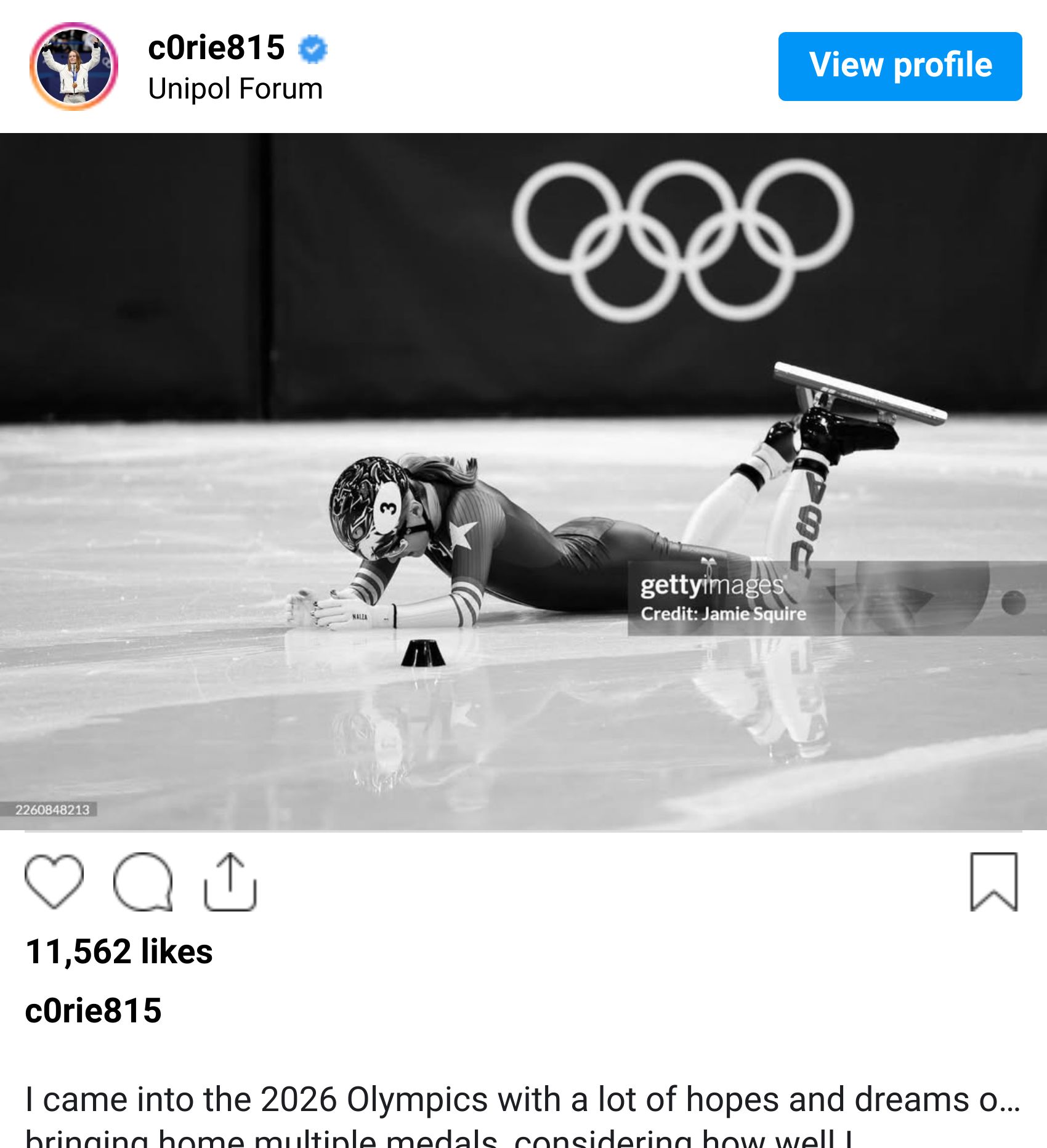
“I’m not sure what’s going on. Part of me thinks I haven’t been able to handle the pressure and expectations I put on myself.”
“I feel embarrassed by how many times I’ve crashed.”
“I also feel embarrassed by how much I’ve choked on the Olympic stage over and over again. This isn’t what I planned to show the world I was capable of.
I’m sorry to my friends and family who’ve had to watch me suffer so many times over the last week.”
It was an incredible display of public honesty. Something that most athletes are unwilling to admit to themselves, she admitted publicly. It’s a powerful tactic to confront your fear.
But, Corinne had one last race.
She won the USA’s first short track medal since 2018.
There’s a lesson in it for all of us. Be willing to admit what you’re going through. Coaching and leadership in athletics can be incredibly isolating and exhausting. You’re not in it alone.
Be willing to admit it to yourself. Build a community around you that can help you shoulder the load.
4. How is Norway so good?

Norway had the blinders on in these Winter Olympics. They have the most medals and gold medals in winter Olympic history. So, it’s not just this time around.
What you might not expect is that they also perform extremely well in the Summer Olympics.
How is a country with a population of 5 million so competitive on the world stage in sports?
It’s brought a lot of focus to their youth sports program.
It’s motto? “Joy of Sport for All.”
They don’t keep score until age 13. There are no such things as travel teams. The emphasis for youth sports is on fun and trying as many things as possible.
Here’s Norway’s Director of Elite Sport, Tore Ovrebo:
“The biggest motivation for kids to do sports is that they do it with their friends and they have fun.
The emphasis in youth sports is on the environment that’s created for these kids to have fun. Early performance is a terrible predictor of talent.
It’s not just good for every kid who plays a sport. It’s actually the best way to cultivate talent. Create an environment where your players enjoy what they are doing.
We often talk about sports as if they are always teaching kids good life lessons. That’s a lie. It teaches them the best lessons when the environment is one that’s healthy for them. And that comes down to leadership.
Maybe the truest test of your job as a coach is whether or not you’re cultivating lifelong lovers of the sport you coach.
🛠️ Want to Build Elite Culture?

Get BETTER’s Culture Playbook. A system designed to install a thriving, healthy, high-performance culture. Join over 1,000 coaches who use our Culture Playbook from youth club teams to national championship NCAA programs and everything in between.