

⏳ Read Time: 3 min, 750 words
📌 What’s inside:
🌱 Why “culture” is often too vague to be useful
🧠 The three environments shaping your team every day
🛠 How leaders intentionally design environments where performance grows
This week’s topic is all about ecosystems!
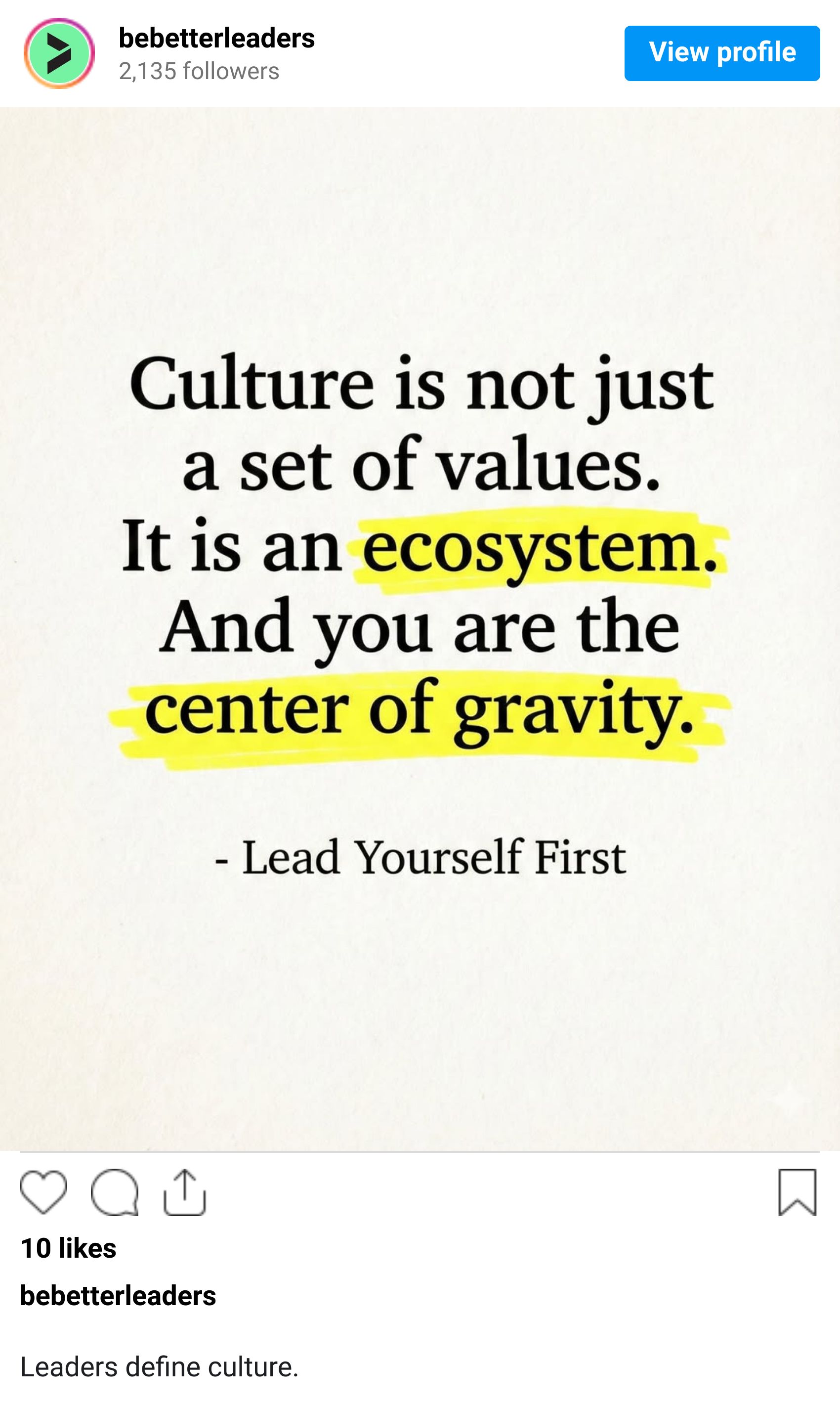
Our first book, Lead Yourself First, is all about the ecosystem we believe coaches should build around their leadership. In its first week, our book hit #1 on Top New Releases in the Sports Category! We’ve heard from many coaches who have read it, love it, and are beginning to take their staff through it.
Haven’t gotten your copy yet?
Already read it? We’d deeply appreciate it if you leave us a review on Amazon.
📖 Anecdote: The Environment You Don’t See
Last week, we wrote about a simple idea:
It sparked a lot of conversations with coaches, and one question kept coming up:
“What exactly do you mean by environment?”
Most coaches hear that word and think of culture. Team values. Standards. The vibe around the program.
Those things matter, but they’re only part of the picture.
If you look closely at great teams, what stands out isn’t just culture. It’s that the leaders have built multiple environments simultaneously.
And whether coaches realize it or not, they are shaping these environments every single day.
The question isn’t if you’re creating them. It’s what kind you’re creating.
📊 Research Insight: Environment Drives Behavior
This week, we will use the same research as last week to make a slightly different point.
Behavior = Person + Environment.
Behavioral scientist Kurt Lewin described behavior as the product of both the person and their environment (B = f(P,E)). In other words, what people do is shaped as much by their surroundings as by their individual traits.
Put simply:
People respond to the environments they’re placed in.
Which means coaches aren’t just running practices or calling plays.
They’re designing environments.
🛠️ The 3 Environments Every Coach Creates
Most leaders shape three environments, whether they intend to or not.
1. The Relational Environment

This is how people feel inside your program. It’s the social environment.
It defines what’s acceptable and what’s not - not on the field or court - but in relationships with each other.
Players constantly take relational cues from their leaders. What types of relationships are acceptable? Are we friends? Peers? Competitors? Or Co-workers?
Your tone, reactions, and body language quietly set the emotional temperature of the room.
Over time, that temperature becomes the team’s default setting.
2. The Learning Environment
This is how people improve inside your program.
Do players feel safe asking questions? Do they know exactly what they’re working to get better at? Is feedback specific and consistent?
Great programs track improvement and make it obvious.
Practices are structured around learning, not just activity. Players leave understanding what they did well, what needs work, and how to improve.
When the learning environment is strong, progress compounds.
3. The Accountability Environment
This is how people understand what actually matters.
Every team says certain things are important:
Effort.
Discipline.
Team-first behavior.
But the accountability environment is revealed by something simpler:
What gets corrected? What gets ignored? What gets rewarded?
Players learn quickly what the real standards are.
Not from speeches.
From patterns in their coaches’ communication.
🪞 Why This Matters
All three of these environments obviously intertwine to create your overall culture. It’s like throwing ingredients into a soup and mixing them all together.
Many coaches spend enormous energy trying to motivate their teams. But motivation is often a symptom of something deeper.
When the relational environment is steady, the learning environment is clear,
and the accountability environment is consistent…
Things like motivation become far less fragile. Players learn how to operate.
And when people know how to operate, performance follows.
🏁 Closing Reflection:
Most leaders focus on strategy. Great leaders pay attention to the environment they are creating.
Because long before results show up on the scoreboard, they show up in the atmosphere of the program.
The best teams rarely stumble into that atmosphere by accident.
It’s built.
And whether we realize it or not, every coach is building one.
🛠️ Want to Build Elite Culture?

Get BETTER’s Culture Playbook. A system designed to install a thriving, healthy, high-performance culture. Join over 1,000 coaches who use our Culture Playbook from youth club teams to national championship NCAA programs and everything in between.