
⏳ Read Time: 3.5 min, 800 words
📌 What’s inside:
🧠 The leadership mistake most coaches make
🌱 Why Norway’s sports system produces champions
🛠 Five ways to build environments where performance grows
This week’s topic is all about ecosystems!
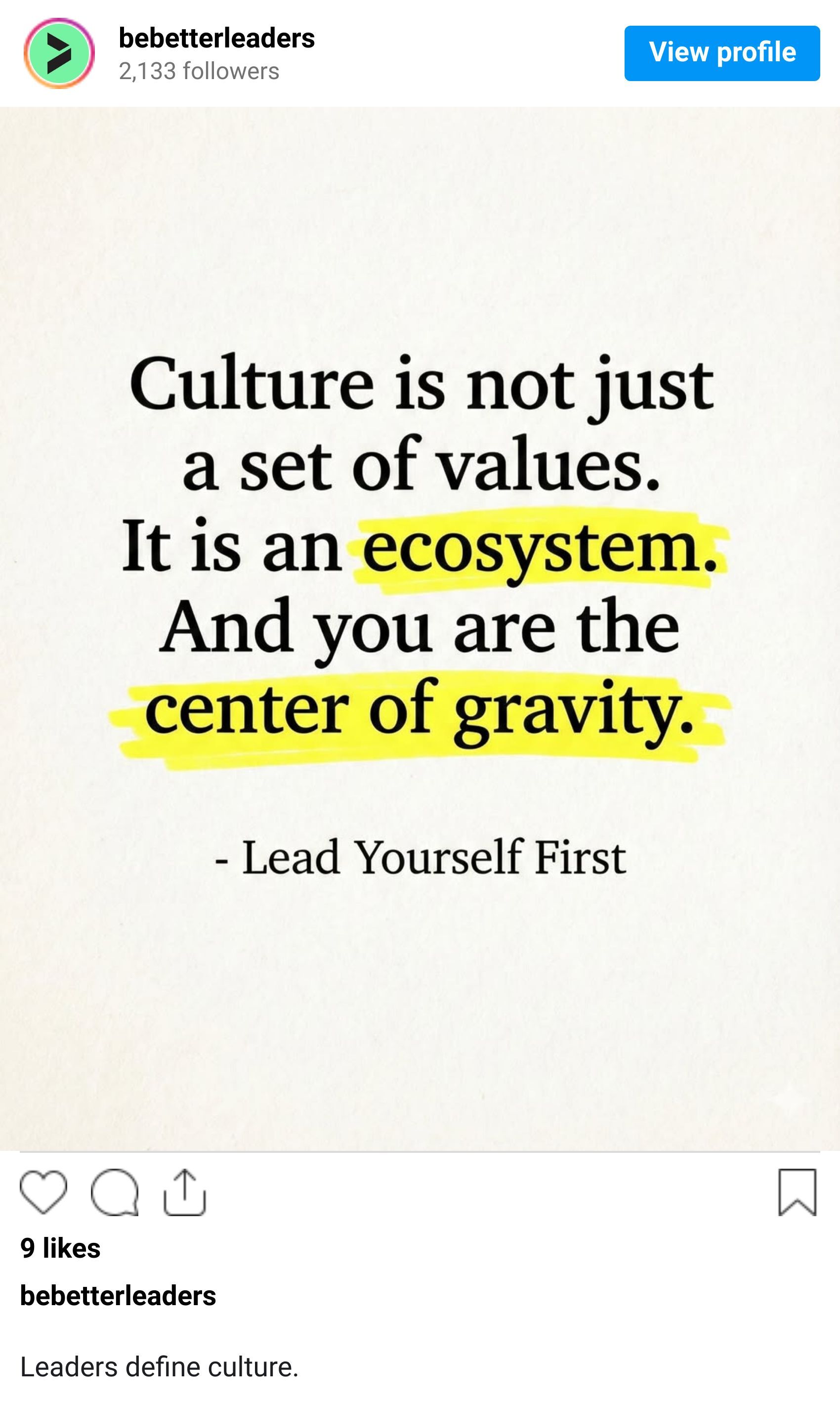
Our first book, Lead Yourself First, is all about the ecosystem we believe coaches should build around their leadership. In its first week, our book hit #1 on Top New Releases in the Sports Category! We’ve heard from many coaches who have read it, love it, and are beginning to take their staff through it.
Haven’t gotten your copy yet?
Already read it? We’d deeply appreciate it if you leave us a review on Amazon.
📖 Anecdote: The Leadership Shortcut That Never Works
One of the most common questions we hear from coaches sounds something like this:
“How do I motivate my players?”
Sometimes it’s phrased a little differently:
“We just need guys who care more.”
“They’ve got to want it.”
“We need better leadership in the locker room.”
But if you zoom out and study the best-performing teams and programs in the world, something interesting emerges.
They spend very little time talking about motivation.
Instead, they obsess over the environment.
Think about the examples from the Olympics.
The U.S. hockey teams that won gold weren’t assembled a few weeks ago. They came through a development system that emphasizes teaching and learning.
Norway, a country of only 5 million people, continues to dominate the Olympics because its youth sports philosophy prioritizes joy, participation, and healthy environments long before elite performance enters the conversation.
In both cases, the same principle appears:
Great environments don’t chase motivation.
They produce it.
📊 Research Insight: Environment Drives Behavior
In social psychology, there’s a well-established idea often summarized as:
Environment is stronger than willpower.
Behavioral scientist Kurt Lewin described behavior as the product of both the person and their environment (B = f(P,E)). In other words, what people do is shaped as much by their surroundings as by their individual traits.
More recently, research in sport psychology and performance science has reinforced this idea. Studies on motivational climates in sport show that athletes perform better, persist longer, and experience greater well-being when the environment emphasizes learning, mastery, and development rather than constant evaluation.

We often use the analogy of different plant types. Each player is like their own plant. Some need more water, some need more morning shade, some more evening sunlight, and some fertilizer.
Your leadership and feedback are like the shade, sunlight, and water. It requires knowing each player on a level where you know how to get the best out of them. And encouraging them to know themselves. This is why a tool like the 5 Voices can be so powerful for coaches and teams.
But, zooming out one layer, your program is the greenhouse.
And coaches focus way too much on their tactics without paying attention to the state of the greenhouse where the plants are supposed to grow.
The takeaway is simple but powerful:
When the environment is right, motivation becomes far less fragile.
When the environment is wrong, motivation becomes almost impossible to sustain.
🛠️ Five Ways Coaches Shape Performance Through Environment
1. Growth, Not Winning, Should Be the Goal.
The best environments reward improvement, not just outcomes.
Players should leave practice feeling like they got better, not just that they survived it.
2. Clarify What Actually Matters
Do you know what matters for your team? And clear is it to your players?
Confusing environments drain energy.
Clear environments focus attention.
Great coaches repeat the same priorities over and over until everyone understands what winning behaviors look like.
3. Build and Coach Emotional Stability
Players perform best when the emotional temperature of the environment is steady.
If the tone swings wildly after every mistake or result, athletes spend more energy managing anxiety than executing.
The leader sets that tone.

4. Reward the Behaviors you Want Repeated.
Culture is reinforced by what gets attention.
If effort, preparation, and teamwork are consistently recognized, those behaviors multiply.
If only outcomes are celebrated, shortcuts will follow.
5. Remember that Your Environment Compounds Over Time
The most powerful environments aren’t built in speeches.
They’re built into daily rhythms.
Small decisions like how practice is run, how mistakes are handled, and how people are treated accumulate to create the atmosphere players experience every day.

🏁 Closing Reflection:
It’s easy to believe that great teams are built by extraordinary motivation.
But if you look closely, the truth is often the opposite.
Great teams are built by extraordinary environments.
Motivation rises and falls.
Confidence fluctuates.
Talent varies from year to year.
But the environment, the thing leaders control, shapes all of it.
And over time, the environment always wins.
🛠️ Want to Build Elite Culture?

Get BETTER’s Culture Playbook. A system designed to install a thriving, healthy, high-performance culture. Join over 1,000 coaches who use our Culture Playbook from youth club teams to national championship NCAA programs and everything in between.