
⏳ Read Time: 3 min
📌 What’s inside:
🎾 What Novak Djokovic says motivates him
🪞 A question most coaches avoid
🧭 Why loving the work matters more than loving the outcome
Our Book is Out!

And not only is it out, but yesterday, our book hit #1 on Top New Releases in the Sports Category! Really cool to see coaches getting and using our manual, built by and for coaches, to lead themselves first!
Haven’t gotten your copy yet?
“I Like Hitting the Tennis Ball.”
In a 2018 interview with the Financial Times, Novak Djokovic was asked about motivation.
By that point, Novak had won 10 Grand Slam titles, including three just that year.
He had achieved everything most athletes chase.
And yet, his answer was strikingly simple.
He said he likes hitting the tennis ball.
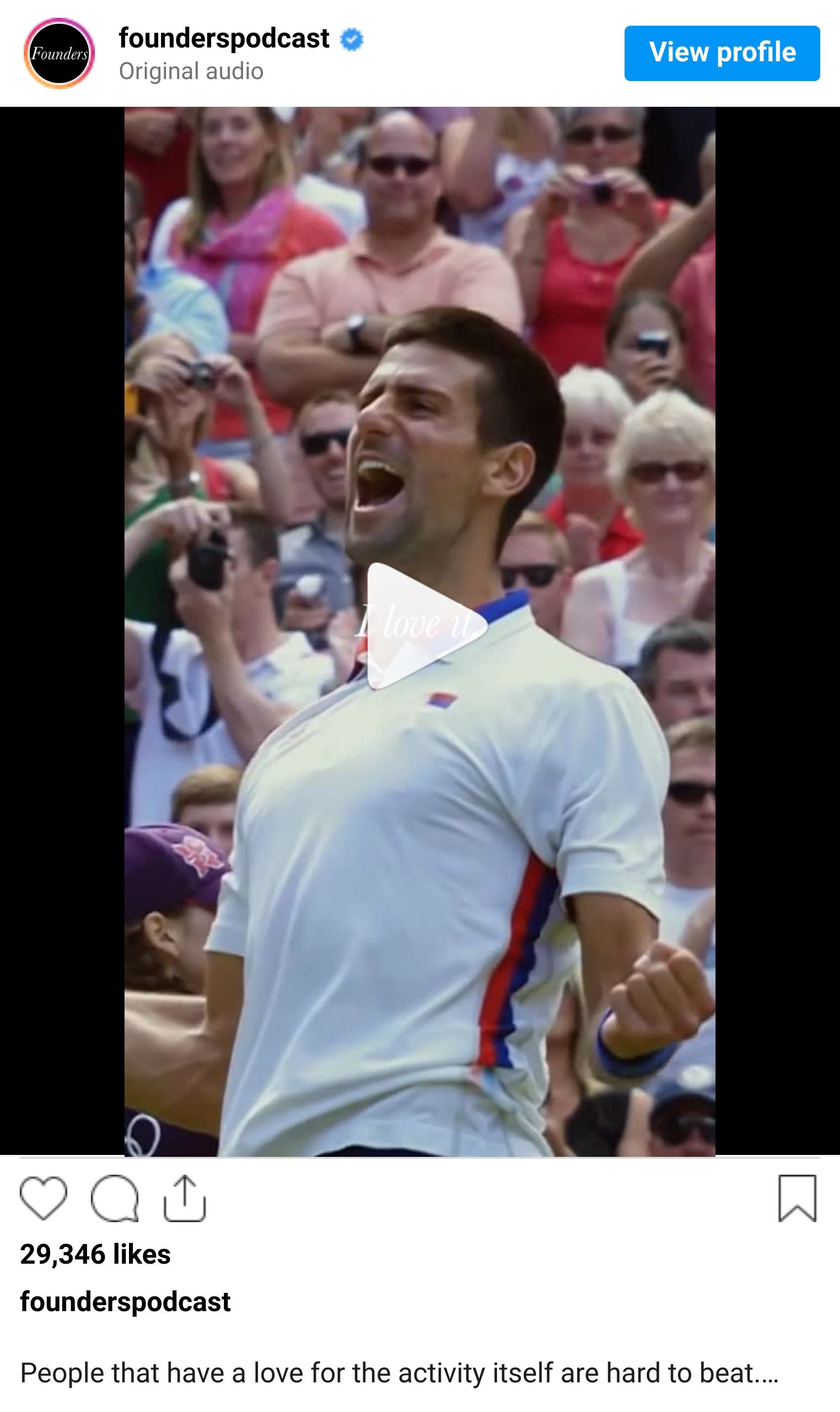
Not the trophies.
Not the rankings.
Not the endorsements.
The act itself.
That enjoyment, the simplicity of liking the work, is part of what allows him to sustain excellence over time.
And it raises an uncomfortable question for anyone in a performance-driven profession.
🪞 The Question Beneath the Question
Do you actually like coaching?
Not winning. Not being respected. Not the feeling of success. Not how it looks on the outside.
The day-to-day work of coaching and developing people.
Teaching
Crafting an environment
Managing emotions
Correcting small things
Being patient with people who don’t learn as fast as you’d like
Do you like that?
Because many coaches love what coaching produces — wins, validation, momentum.
But fewer love what coaching requires — presence, patience, humility, repetition.
That difference matters more than we admit.
📊 Research Insight: Motivation That Lasts
Research on motivation consistently distinguishes between extrinsic motivation (outcomes, rewards, status) and intrinsic motivation (enjoyment of the activity itself).
Psychologists Edward Deci and Richard Ryan, through their work on Self-Determination Theory, found that people who are primarily driven by intrinsic motivation:
persist longer under pressure
experience less burnout
maintain higher quality engagement over time
In sports, this distinction is clear.
Athletes and coaches, any leader at all, who enjoy the process tend to weather slumps better than those who rely on outcomes to fuel them.
Put simply:
If you only love what the work gives you, the work will eventually drain you.
If you love the work itself, you can sustain it.
⛳ A Parallel We See All the Time
We see the same divide among the PGA Tour Golfers we’ve worked with.
Some golfers genuinely love playing golf: the practice, the nuance, the solitude, the repetition. When we ask them what fills their soul, some say “being on the course, hitting the golf ball.”
Others see golf primarily as a vehicle for status, income, or validation. When results dip, the first group stays grounded. The second group stagnates or even spirals.
You have to ask yourself some deeper questions about your why. What is driving you? You must be willing to be honest with yourself.
Coaching is no different.
🛠 Five Reflection Questions for Coaches
Rather than turning this into a judgment, turn it into a reflection:
The best way to learn about yourself is to be curious, not judgmental.
1. What parts of coaching (or my leadership role) do I genuinely enjoy even when I’m not winning?
2. What parts of coaching drain me because I expect them to deliver outcomes instead of satisfaction?
3. If results were taken away for a season, would I still coach?
4. Where have I tied my identity too tightly to performance instead of practice?
5. What would it look like to anchor my motivation to the act of coaching itself?
These aren’t questions to answer once.
They’re questions to return to.
🏁 Closing Reflection:
Novak Djokovic didn’t say he loves winning Wimbledon.
He said he likes hitting the tennis ball.
The best coaches we know share something similar.
They don’t just chase outcomes. They enjoy the work.
If coaching has started to feel heavy, brittle, or exhausting, it may not be because you’re doing it wrong.
It may be because you’ve drifted away from why you do it in the first place.
Sometimes the most important leadership reset isn’t strategic.
It’s motivational.
🛠️ Want to Build Elite Culture?

Get BETTER’s Culture Playbook. A system designed to install a thriving, healthy, high-performance culture. Join over 1,000 coaches who use our Culture Playbook from youth club teams to national championship NCAA programs and everything in between.